 The standard Galaxy Note 20 will sport a 6.42-inch Full HD+ AMOLED display with a 120Hz refresh rate and a 1084*2345 resolution.
from Top Tech News- News18.com https://ift.tt/36I1gzO
The standard Galaxy Note 20 will sport a 6.42-inch Full HD+ AMOLED display with a 120Hz refresh rate and a 1084*2345 resolution. These news production contractors work with Microsoft News, the company's news content arm that operates MSN.com and other properties
 Sony has so far unveiled a logo for the console, the PS5 gamepad, and a tech demo showing the console's graphics capability.
The rumors were true: a McLaren official has confirmed that there won’t be another OnePlus McLaren edition.
The luxury automaker recently dropped the OnePlus logo from its Partners page, leading to speculation that the refined and pricey OnePlus McLaren editions had been cancelled. The car company finally confirmed that there wouldn’t be another partner-produced version of a OnePlus phone in a statement sent to Android Authority:
“Our partnership with OnePlus, which came to its scheduled conclusion recently, has been a highly successful collaboration between two iconic and innovative brands,” McLaren’s statement read. “Since the start of this partnership in 2018, OnePlus has been a supportive, valued partner and we wish them well and hope to see them in the future.”
We’d seen exactly two of the fancy editions starting with the OnePlus 6T McLaren Edition in 2018 and followed with the OnePlus 7T McLaren Edition.
At CES 2020, the phonemaker showed off the OnePlus Concept One that featured McLaren window tech to hide its rear cameras, but that wasn’t a consumer-ready device. Since we hadn’t heard whether a new McLaren Edition would accompany the next OnePlus 8T generation, we weren’t sure if we’d see another again. That question seems to have been answered.
Of course, we’re not in the best market for costlier versions of flagship phones anyway, and each generation of the once-affordable OnePlus handsets have been pricier than the last.
Thus, it was probably time for the OnePlus McLaren editions to reach the end of the road anyway and stop trying to compete with the likes of the Huawei Mate 30 Porsche edition and the Oppo Find X Lamborghini. But given the seemingly amicable splitting of ways between OnePlus and McLaren, perhaps a partnership sometime in the future is possible – when the market’s ready for another luxury carmaker’s take on a smartphone.
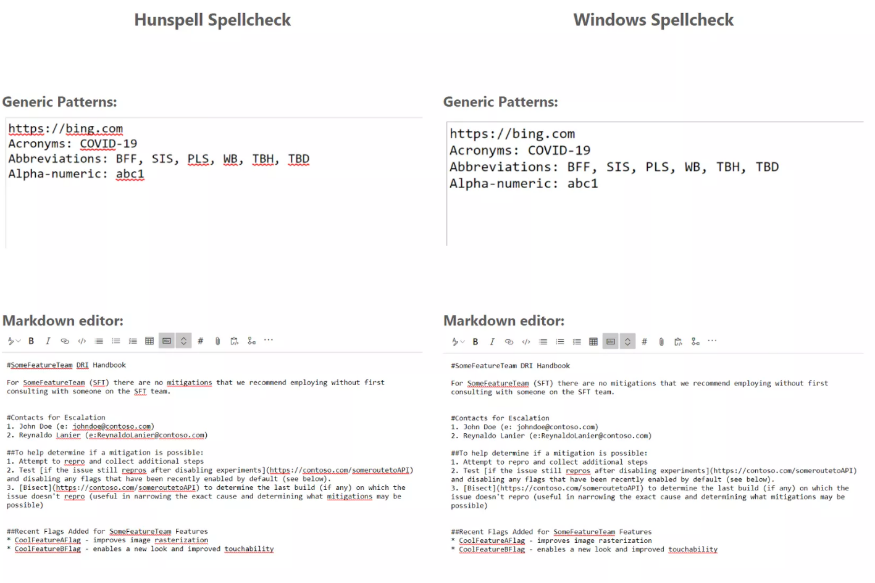 The new spell-checker will bring out a series of benefits like better support for URLs, acronyms, an improved shared custom dictionary, email addresses and more.
Sandia National Laboratories has announced it will be the first Department of Energy labs in the US to deploy the Fujitsu A64FX, the only ARM-based processor designed from ground up for HPC projects and supercomputers.
Fujitsu is known primarily for its business laptops, tablets and desktops, but is a behemoth in its own right when it comes to processors, having been in the business for well over half a century.
Launched in 2019, the CPU has 48 cores, a theoretical peak performance of 3.38 TFLOPS, runs at 2.2GHz and has 32GB HBM2 memory on the die itself.
What makes it ideal for the HPC market is that it provides far higher bandwidth performance between memory and the CPU - up to 1TBps. Moving data to and from the CPU is the biggest obstacle by far to what researchers refer to as exascale computing.
What makes the A64FX even more exciting is that Fujitsu wants the technology to trickle down to hyperscalers and major cloud computing giants so that the masses can benefit too.
Given it is based on ARM architecture, it can (and has) run Linux distributions out of the box and even Microsoft Windows.
It is considered a general purpose CPU, but surpasses even GPUs from Nvidia and AMD on the all-important metric of performance per watt. Indeed, a 768-CPU prototype sits on top of the Green500 list - the leaderboard for supercomputers that deliver the most power per watt.
The A64FX was designed expressly to power the successor of Japan’s main supercomputer, the K, which was decommissioned back in August 2019.
Its replacement - the Fugaku - is expected to be 100 times faster when it launches later this year, will run on a Linux distribution called McKernel and will reach a staggering 400 petaflops. The aim is for it to be the first supercomputer to hit one exaflop when fully deployed with half a million processors buzzing.
The developers of two open source code libraries for Secure Shell, which is the protocol used by millions of computers to create encrypted connections, have decided to no longer support the Secure Hash Algorithm 1 (SHA-1) due to growing security concerns.
As reported by Ars Technica, developers using the OpenSSH and Libssh libraries will no longer be able to use SHA-1 to digitally sign encryption keys going forward. In its release notes, OpenSSH explained why it will no longer support SHA-1, saying:
“It is now possible to perform chosen-prefix attacks against the SHA-1 algorithm for less than USD$50K. For this reason, we will be disabling the "ssh-rsa" public key signature algorithm by default in a near-future release. This algorithm is unfortunately still used widely despite the existence of better alternatives, being the only remaining public key signature algorithm specified by the original SSH RFCs.”
SHA-1 is a cryptographic hash function that was first developed in 1995. It is used for producing hash “digests” which are each 40 hexadecimal characters long and these digests are meant to be distinct for every message, file and function that uses them.
A collision is a cryptographic term used to describe when two or more inputs generate the same outputted digest and researchers began warning that SHA-1 was becoming increasingly vulnerable to collisions almost a decade ago.
In 2017, SHA-1 fell victim to a collision attack that cost $110,000 to produce which lead to a number of browsers, browser-trusted certificate authorities and software update systems to abandon the algorithm though some services and software continued using it despite the risk.
However, in January of this year, researchers showed that an even more powerful collision attack could be launched for just $45,000. This chosen-prefix attack showed that it is possible to modify an existing input and still end up with the same SHA-1 hash and an attacker could use this method to alter documents or software to bypass SHA-1-based integrity checks.
While OpenSSH and Libssh will no longer support SHA-1, the encryption algorithm is still supported in recent versions of OpenSSL.
Via Ars Technica
The Vivo X50 series has been gaining a lot of attention off late. The new device may represent an even more important event for Vivo as a brand in India as it may be just the right one to mark its return to the high-end smartphone space in the country.
Sources aware of the developments have confirmed to us that the upcoming Vivo X50 will indeed be making its way to India, soon after the Chinese launch, which is scheduled for June 1. It’s unclear which variant will be coming, but the teaser did suggest that it will be the Vivo X50 Pro.
This will mark the return of Vivo’s X series to India after over two years, with the last one being the Vivo X21 in 2018. Even more recently, it has primarily focussed on the budget and mid-range segments, but a proper flagship has always eluded India.
The Vivo X50 Pro is a camera-centric premium mid-ranger which will be powered by the Snapdragon 765G with at least 8GB of RAM and 128GB of storage. If the same specifications make it to India, it will be one of the first phones in the country to sport this chipset. Besides, it will also be 5G-capable. Most of its specs have already been leaked from a recent product briefing in its home country. Other key details include a 4,315mAh battery and support for 33W fast charging.
It will also bring a new premium design with a curved, 6.56-inch high refresh rate display along with a tiny 32MP punch-hole selfie camera on the front, and a frosted glass back. A sizeable camera island will also adorn the back, with four shooters lined up. The primary camera will be a 48MP Sony IMX598 image sensor, followed by an 8MP ultra-wide shooter, a 12MP short telephoto lens and an 8MP periscopic long telephoto lens.
Vivo claims that the primary camera will have industry-leading image stabilisation with a new “micro-cloud” system with up to 3-degrees of compensation on either of the axes. This complicated mechanism is also the reason why the camera bump is so significant.
There is no word on the exact availability, but considering that Vivo is in advanced stages of planning the device’s launch in India, we expect it arrive on Indian shores soon enough. And, Vivo’s first pair of TWS earphones may also tag along.


